Design for disassembly5 min read
Built to be taken apart
Why every piece we make unbolts, unzips and unscrews, and what that means ten years from now.
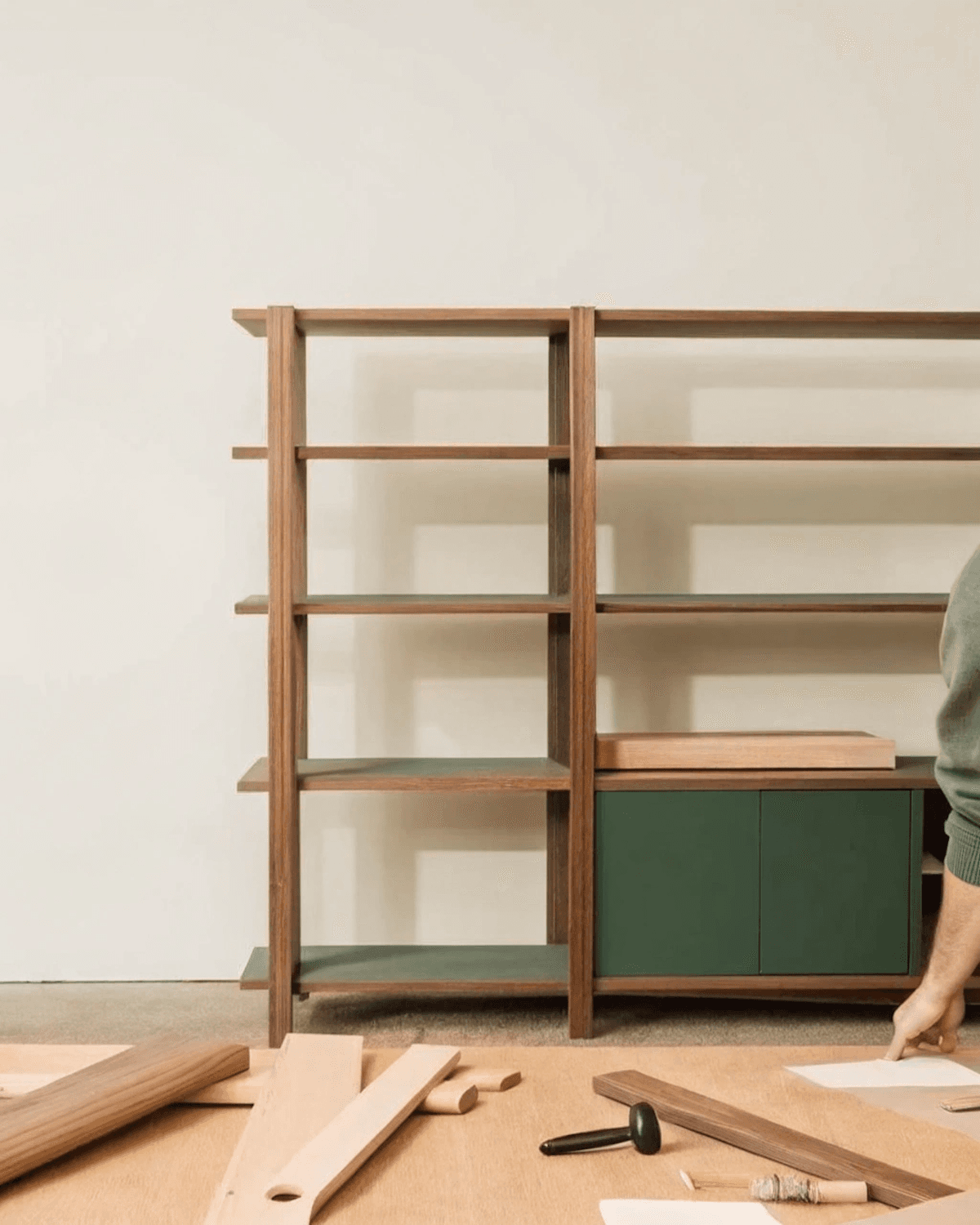
Furniture usually fails at its weakest part. A cover wears through, a cushion flattens, a joint works loose. When that part is glued or stapled in place, the whole piece ends up thrown away.
We design the other way around. Every piece is drawn first as a set of parts that can be separated with ordinary tools.
What that looks like in practice
- Frames join with threaded inserts and bolts instead of permanent glue lines.
- Covers zip or hook off, so they can be cleaned, repaired or replaced.
- Cushions are layered rather than bonded, so a tired layer can be swapped on its own.
- Legs and bases unscrew for moving day, then go back on in minutes.
Why it matters
Fewer parts and fast swaps keep a piece in use for longer, and that is the single biggest thing we can do for its footprint. It also means your sofa can change with you, from a new colour to a new configuration, without starting again.
If a part ever does fail, we keep spares for every piece we make, listed in its passport.